
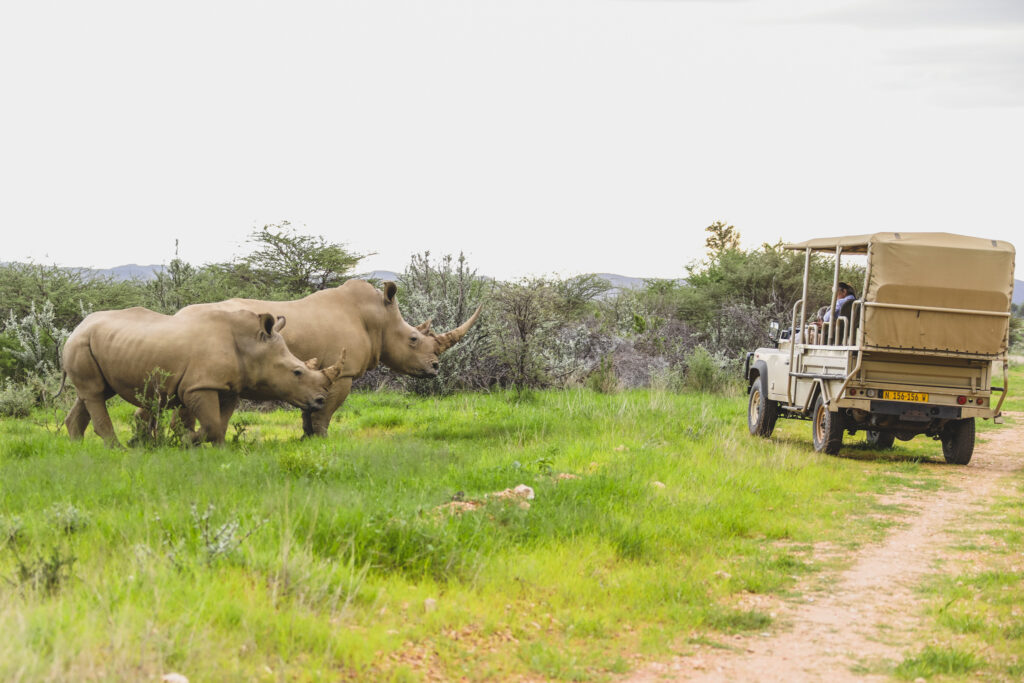
Namibia Safari Guide: Deserts, Etosha and the Skeleton Coast
Namibia is Africa’s great road trip: red dunes, empty coastlines, ancient rock art and waterholes crowded with wildlife, joined by quiet roads and endless space.
This guide shows you where to go, when to go, and whether to drive yourself or travel with a guide.
Why visit Namibia?
Few countries mix landscapes, wildlife and freedom like Namibia. It suits photographers, first-time safari travellers and anyone who loves open space.
Landscapes like nowhere elseRed dunes, salt pans, canyons and a wild Atlantic coast.
Excellent wildlifeEtosha’s waterholes, desert-adapted elephants and black rhino.
Rich cultureHimba communities and ancient rock art add depth to your journey.
Made for road tripsGood gravel roads and little traffic make self-drive rewarding.
Space and silenceOne of the least densely populated countries on Earth.
Easy to combineThe Zambezi Region links easily with Chobe and Victoria Falls.
Top places to visit in Namibia
Namibia is big, and each region has its own character. Here is what makes each one worth the drive.
Sossusvlei and the Namib Desert
Towering red dunes in what is often called the world’s oldest desert. Sunrise here is one of Africa’s great photographs.
- Dune 45 and Big Daddy, some dunes over 300 m high
- Deadvlei’s ancient, sun-blackened trees
- Sesriem Canyon
Best timeMay – September, for cooler days.
Etosha National Park
A huge salt pan ringed by waterholes, where wildlife comes to drink in the dry season. One of the best places in Africa to see black rhino.
- Elephants, lions, giraffe and zebra at waterholes
- Floodlit waterholes at night
- Easy self-drive or guided game viewing
Best timeJune – October.
Damaraland and Twyfelfontein
Rugged red mountains and dry riverbeds where desert-adapted elephants survive against the odds.
- Desert-adapted elephants
- Twyfelfontein’s ancient rock engravings, a UNESCO site
- Remote, dramatic landscapes
Best timeMay – October.
Skeleton Coast
Where the desert meets the Atlantic: fog at dawn, shipwrecks on the beach and a huge seal colony at Cape Cross.
- Shipwrecks and empty beaches
- Cape Cross seal colony
- Some areas are 4×4 or fly-in only
Best timeYear-round. Seal pups November – December.
Swakopmund and Walvis Bay
Namibia’s adventure coast, and a cool break from the desert heat.
- Kayaking with seals
- Quad biking and sandboarding on the dunes
- Scenic flights over the coast and desert
Best timeYear-round.
Fish River Canyon
A vast canyon in the far south, often called Africa’s largest. Quiet, rugged and beautiful.
- Dramatic viewpoints
- A famous multi-day hiking trail
- Wide open desert scenery
Best timeMay – September for hiking.
The Kalahari
Red dunes, golden grass and a slower pace. An easy first or last stop near Windhoek.
- Game drives on private reserves
- Relaxed lodge stays
- Big skies and sunsets
Best timeYear-round.
The Zambezi Region
Namibia’s green, watery north-east: rivers, floodplains and wildlife, and just a few hours from Livingstone.
- Bwabwata, Mudumu and Nkasa Rupara parks
- River cruises, fishing and birding
- Elephants and buffalo on the floodplains
Best timeJuly – October.
Etosha update: In September 2025 a large wildfire burned more than a third of Etosha. The park remains open and is recovering, and fresh grass after the rains often draws wildlife back quickly. We will give you current conditions when you plan.
Namibia’s travel calendar, month by month
Namibia is a year-round destination, but each region has its best months. Use this to match your dates to the right route.
Swipe sideways to see every month.
| Wildlife event | Jan | Feb | Mar | Apr | May | Jun | Jul | Aug | Sep | Oct | Nov | Dec |
|---|---|---|---|---|---|---|---|---|---|---|---|---|
| Waterhole game viewingEtosha National Park | Good | Good | Good | Good | Good | |||||||
| Dunes and desert in cooler weatherSossusvlei and the Namib | Good | Good | Good | Good | Good | |||||||
| Fish River Canyon hiking seasonSouthern Namibia | Good | Good | Good | Good | Good | |||||||
| River wildlife and birdingZambezi Region | Good | Good | Good | Good | ||||||||
| Seal pups at Cape CrossSkeleton Coast | Good | Good | ||||||||||
| Green plains and newborn animalsEtosha National Park | Good | Good | Good | Good | ||||||||
| Green-season birdingCountrywide | Good | Good | Good | Good | Good | Good | ||||||
| Coastal adventuresSwakopmund and Walvis Bay | Good | Good | Good | Good | Good | Good | Good | Good | Good | Good | Good | Good |
Good time to go
Guide’s tip: December to February is very hot in the desert. If you travel then, plan dune walks for sunrise and spend the afternoons at the coast or by a pool.
Guided safari or self-drive?
Namibia is one of the few African countries where driving yourself works well. Both styles have real advantages.
| Guided and lodge-based | Self-drive | |
|---|---|---|
| Best for | First-time visitors and anyone who wants to relax | Confident drivers who love independence |
| Wildlife | A guide finds and explains animals for you | You find them yourself, at your own pace |
| Driving | None; we handle the long distances | Long days on gravel roads |
| Flexibility | Set route, planned for you | Change your pace day by day |
| Cost | Higher | Lower |
Guided and lodge-based trips
13-Day Desert, Coast and Etosha Safari
RouteSossusvlei, Swakopmund, Damaraland, Etosha
Our most complete guided journey. Ideal for first-time visitors who want the full picture without driving.
4-Day Namib Desert Discovery
RouteSossusvlei and Deadvlei
A short, photography-focused escape built around the dunes.
4-Day Etosha King Nehale Wildlife Escape
RouteEtosha National Park
Private waterhole access inside Etosha, reserved for lodge guests.
5-Day Namushasha River Lodge Safari
RouteBwabwata, Zambezi Region
River cruises, fishing and game drives in Namibia’s green north-east.
Self-drive safaris
Go Great: 11 days
RouteEtosha, Palmwag, Twyfelfontein, Swakopmund
The shortest route and a strong introduction to self-driving Namibia.
Go Epic: 13 days
RouteKalahari, Sossusvlei, Swakopmund, Twyfelfontein, Etosha
The classic Namibia route.
Go Wild: 14 days
RouteAdds the Okavango River, Zambezi Region and Chobe
A wildlife-and-water finish along the Chobe River.
Go Big: 15 days
RouteFish River Canyon, Sossusvlei, Swakopmund, Damaraland, Etosha
The most complete route, and the only one with Fish River Canyon.
More detail in our Namibia self-drive guide.
Namibia is closer than you think
Namibia’s Zambezi Region begins just across the border from western Zambia, a few hours’ drive from Livingstone. That makes it easy to combine Victoria Falls, Chobe and Namibia’s rivers in one trip, or to add a few days at the Falls to a Namibia trip.
Easy combinations
- Victoria Falls, Chobe and the Zambezi Region
- A Namibia self-drive with a Chobe finish
- Etosha and the Okavango Delta
- Namibia, then a Zambia safari in South Luangwa
Practical tips for your Namibia trip
Driving
- Vehicle: a 4×4 is strongly recommended for Sossusvlei, remote areas and the dunes.
- Distances: they are long. Plan fuel and food stops, and avoid driving after dark.
- Gravel roads: keep your speed down; most accidents happen on gravel.
- Bookings: reserve park camps and lodges well ahead, especially for July – October.
Before you go
- Getting there: fly into Windhoek’s Hosea Kutako International Airport, usually via Johannesburg or a European hub.
- Entry: visa rules depend on your nationality. Check official Namibian government sources before you travel.
- Health: the north carries a malaria risk, especially the Zambezi and Kavango regions. See a travel clinic, and carry plenty of water in the desert.
- Money: the Namibian dollar is tied to the South African rand, which is also accepted. Cards work widely in towns.
Namibia travel: frequently asked questions
When is the best time to visit Namibia?
May to October for wildlife in Etosha and cooler days in the desert. November to April brings green landscapes, newborn animals and great birding, but the desert gets very hot.
Do I need a 4×4 in Namibia?
For Sossusvlei, remote regions and the dunes, yes. It is strongly recommended for most self-drive routes.
Can I self-drive in Namibia?
Yes. Namibia is one of the best self-drive destinations in Africa, with good gravel roads and little traffic. Our Go self-drive routes come fully planned, with lodges booked.
Is Etosha still worth visiting after the 2025 fire?
Yes. The park is open, and burned areas often recover quickly once the rains bring fresh grass. We will share current conditions when you plan your trip.
How many days do I need in Namibia?
Allow 10–15 days to see the desert, the coast and Etosha without rushing. Four-day trips work well as add-ons.
Explore more of the region
Combine with neighbours
Ready to plan your Namibia trip?
Guided or self-drive, short escape or grand tour: tell us your dates and interests, and we will plan the route, lodges and timing for you.